
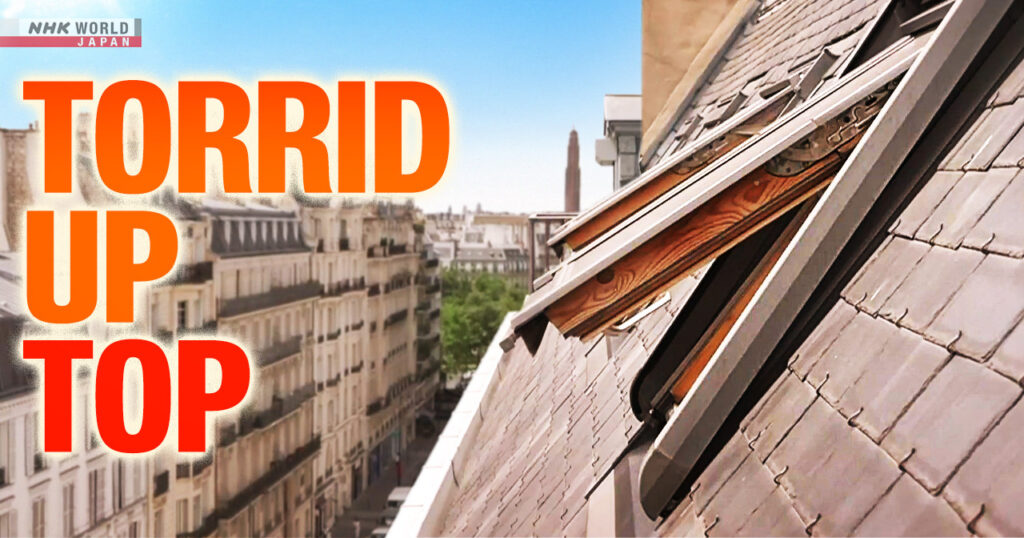
France is sweltering in a record-breaking heat wave. And Parisians living directly under the capital’s beloved zinc rooftops are especially at risk.
“Numerous cities have ultimately redefined their climate records with this extreme event,” said one meteorologist with France’s weather agency about the heat wave.
It began in mid-June and lasted for two weeks. By the 24th, the mercury in Paris had hit 40.6 degrees Celsius.
And in the seven days beginning June 22, there were over 2,000 more deaths reported than the week before. The broad consensus was that the heat played a role.
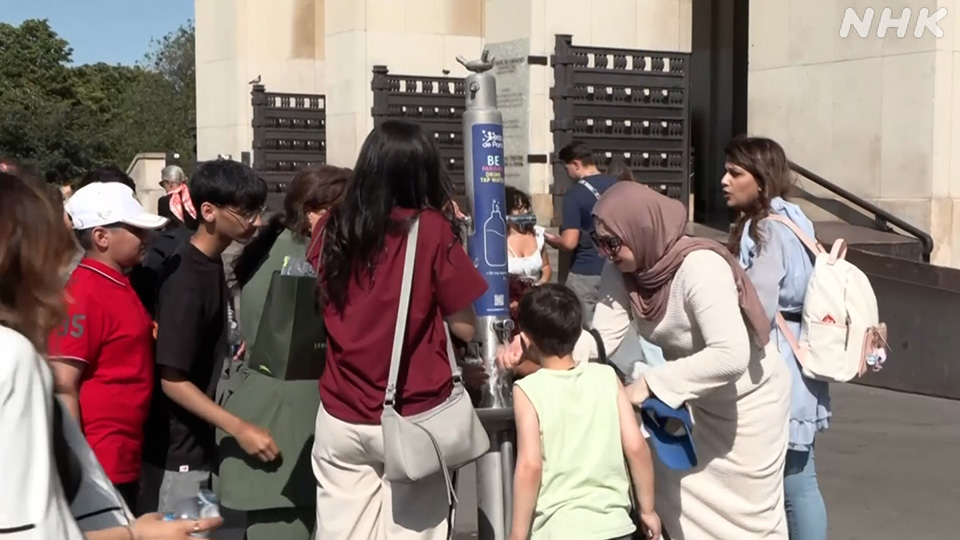
People in Paris are seen at a drinking fountain.
The meteorologist said heat waves have become more frequent in France since the 2000s. He even floated the idea of creating a fifth season called “super summer,” and he warned that global warming could make the situation even worse.

A meteorologist said heat waves in France could become even more severe.
City sights and star cyclists feel the heat
Major tourist sites including the Eiffel Tower and the Louvre Museum have shortened their operating hours to protect visitors from the high temperatures.

Visiting times have been shortened at the Eiffel Tower.
And operators of the Tour de France, the world’s most prestigious bicycle race, were forced to shorten the route of one stage by 30 kilometers. The AFP news agency says the move was a first in the event’s long history.
Some people have been using rivers to cool off, but the results have been tragic. French Interior Minister Laurent Nunez said on Sunday that there have been 139 drownings since June 19.
The stunning Paris skyline has featured in countless paintings and movies. About 80 percent of the buildings are covered in zinc roofing. They date back to the 19th century, when the city underwent a sweeping renewal project.
Zinc was chosen because it is lightweight and easy to shape. And the roofs have since become a beloved part of the French capital’s architectural makeup. In 2024, the skills of those who craft them were listed as a UNESCO Intangible Cultural Heritage.

The zinc rooftops of Paris are one of the city’s defining features.
Parisians with attic apartments suffer more
But living the high life when Paris is sweltering can be brutal, because zinc absorbs and conducts heat. Life in an attic apartment can pose a significant health risk.
“I felt like a fish out of water in the heat wave,” says Meryll Frebour, who has lived in an attic apartment with views of the Eiffel Tower for the past six years. “I had never experienced temperatures that extreme in Paris, especially for such an extended period of time.”

Meryll Frebour had never experienced such high temperatures in Paris.
If the mercury hits 40 degrees Celsius in Paris, authorities say the zinc roofs can get twice as hot.
Frebour wanted to find out for herself using an infrared camera to record the temperature of the zinc roof surrounding her apartment. She confirmed that it did in fact reach as high as 80 degrees. But perhaps even worse, the indoor temperature never fell below 32 degrees, even at night.
Frebour coated her windows with a white powder to block out the sunlight. She also bought cooling mats designed for dogs.
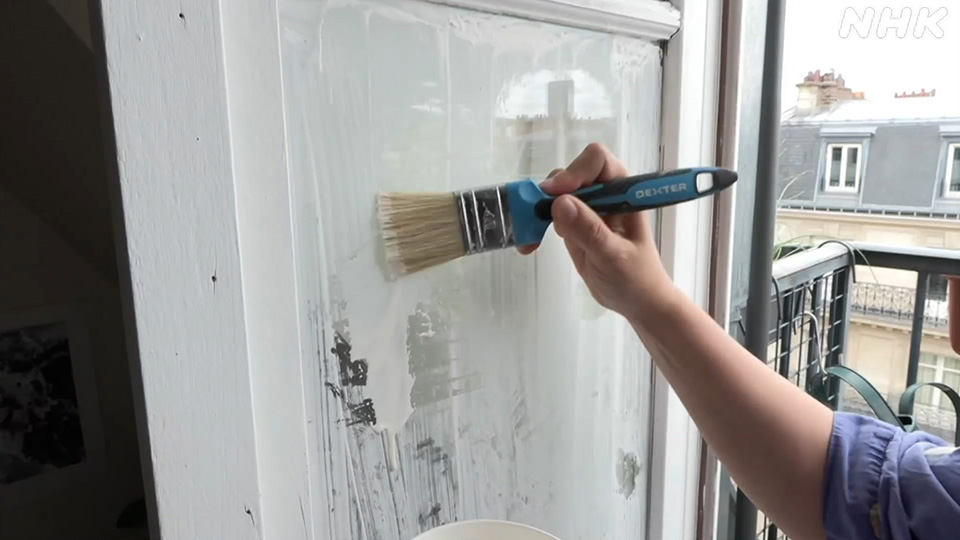
Frebour coated her windows in white powder to repel the heat.
Time to rethink the zinc?
The heat wave was the subject of a public meeting in Paris on July 1. People who live in apartment buildings repeatedly called for measures to address the risks to their health.
One participant said buildings need better insulation, as well as more greenery on their rooftops and in their courtyards. He said air conditioners should only be used in apartment buildings during emergencies because they expel heat into shared courtyards.
Another person described experiencing climate-related trauma. She also said she thinks some people were forced out of their homes because of the heat.

A public meeting on the heat wave drew a large crowd.
Rising temperatures pose a significant dilemma for Paris, widely regarded as one of the world’s most beautiful capitals. The so-called City of Lights is fast becoming known as the City of Extreme Highs, and the residents are increasingly calling for action.
The issue is emerging as a hot topic ahead of next year’s presidential election. Authorities may need to find a way to counter the heat while preserving the Parisian architecture that captivates both residents and tourists alike.