

New developments in areas close to stations are forbidden from providing car parking spaces but residents say they still want places to parkKumail Jaffer Local Democracy Reporter covering the Mayor of London and the Greater London Authority
15:29, 16 Sep 2026Updated 15:39, 16 Sep 2026

The Mayor of London is hoping that 80 per cent of journeys will be made on foot, bicycle or public transport by 2041(Image: Greater London Authority/Caroline Teo)
Car-free developments are making life a “misery” for residents in outer London, the Mayor has been told. The draft London Plan, which is City Hall’s planned spatial strategy for the next decade, aims to “limit car parking in new development to reduce car use and enable optimisation of sites”.
New developments in areas close to stations or with high levels of public transport connectivity are prohibited from providing car parking spaces for incoming residents.
“As London continues to grow, restrictions on car parking are required to limit car use so that congestion on London’s roads can be managed,” the document, which is currently undergoing consultation, states.
“It is also a fundamental requirement for making the best use of land and accommodating more homes and growth than would otherwise be possible.”
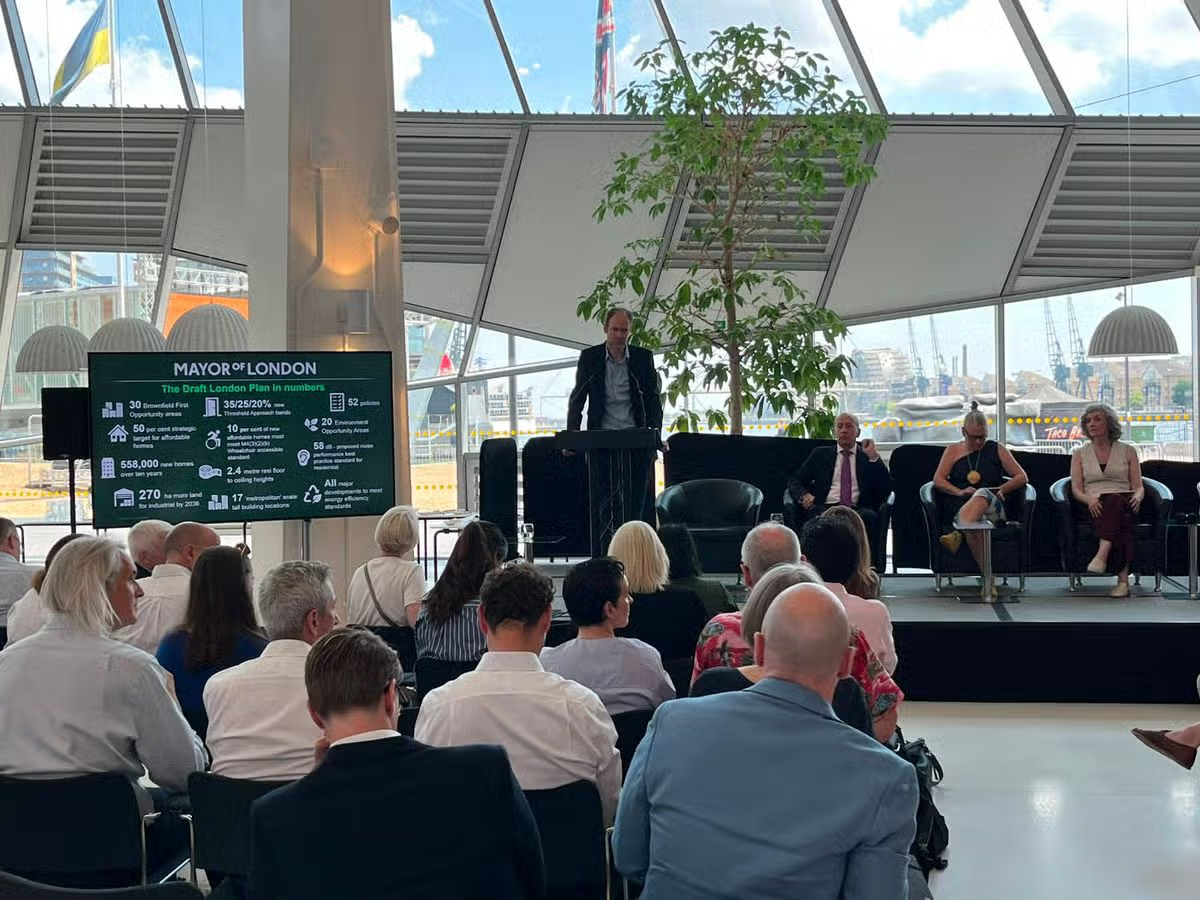
The Draft London Plan aims to limit car parking in new developments where possible(Image: Kumail Jaffer/LDRS)
Senior officials have been forced to defend the policy, which aids the Mayor’s goal of 80 per cent of journeys being made on foot, by bicycle, or by public transport by 2041, to furious Assembly Members.
Susan Hall, leader of the City Hall Conservatives, said that people living in car-free developments will still purchase a vehicle out of necessity, but will take up kerbside spaces elsewhere, making congestion worse for existing residents.
“Believe it or not, if you live in outer London, to actually get to some places, you have to have a car,” she told a London Assembly Plenary meeting with the Deputy Mayors for Planning and Housing last week.
“So consequently, these people that you think if you don’t give them a car parking space, they won’t have a car – wrong. They do.
“And they park them everywhere and make life a misery for everywhere else.”
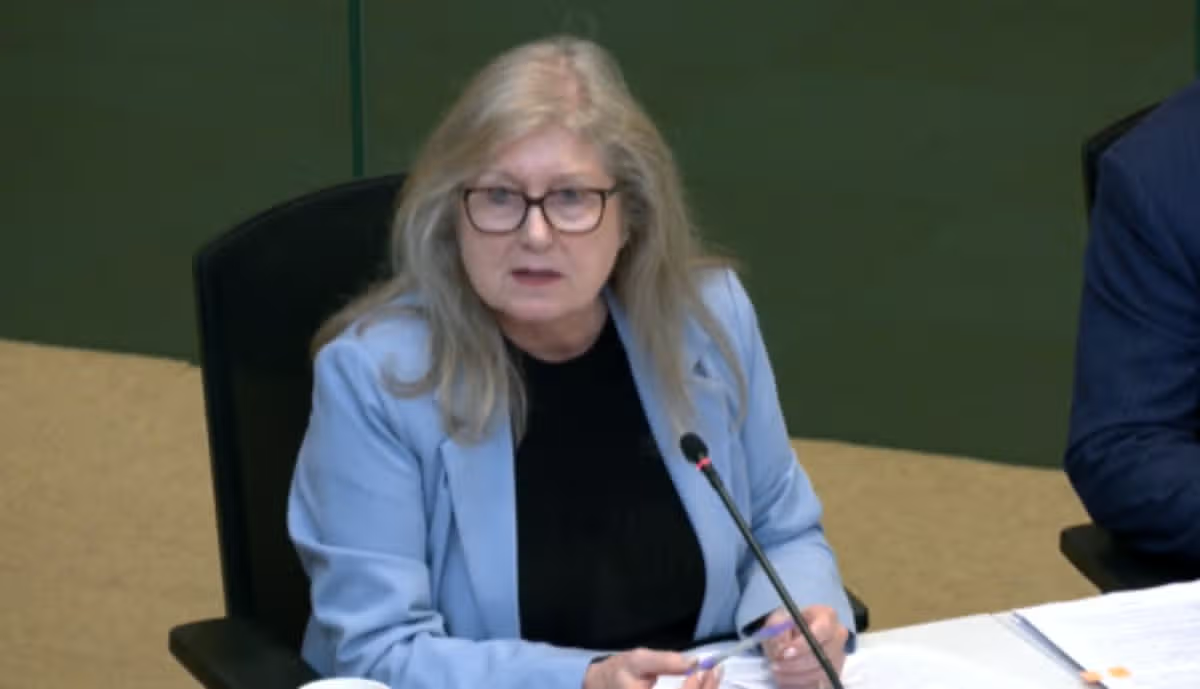
Susan Hall challenged the Deputy Mayor for Planning over the proliferation of car free developments in outer London(Image: London Assembly)
Deputy Mayor for Planning Jules Pipe said that it was “absolutely fair” for a property to have no parking provision if it was near a railway station.
“Everyone accepts we are short of land,” he told Ms Hall, “It cannot be given over to car-hungry developments, whether that’s giving wide streets for car parking or whether it’s off-site car parking. We cannot afford the space to carry on.”
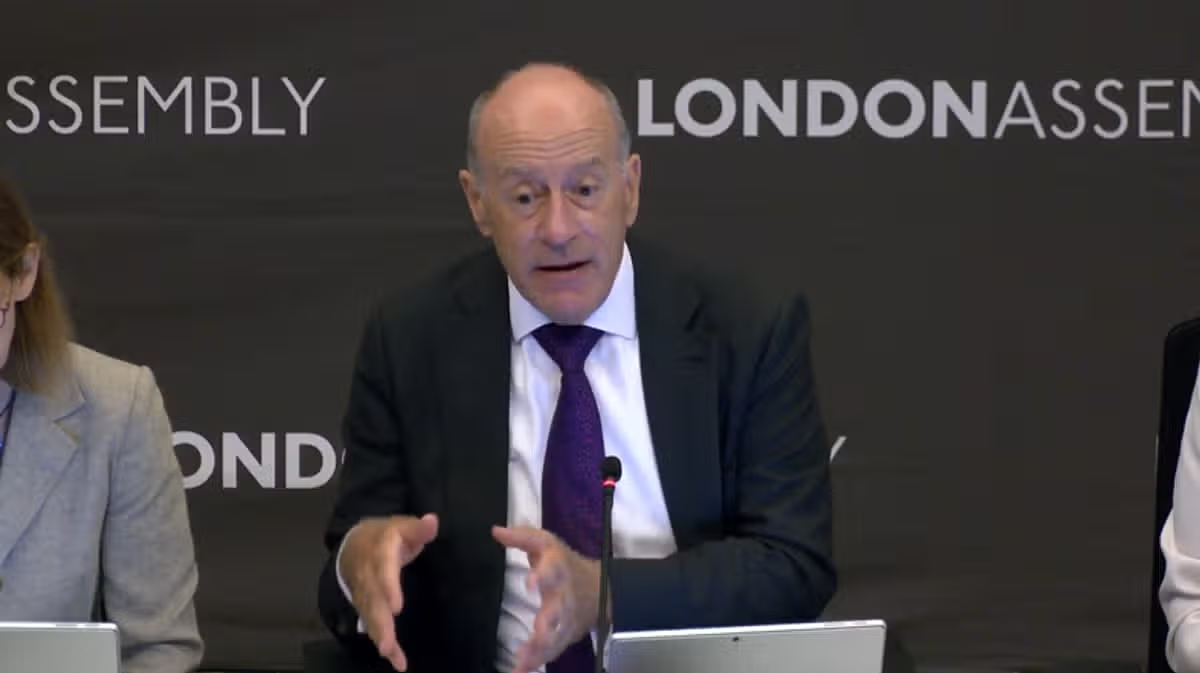
London is too “short of land” to allow car parking provision to take up space in all new developments, Pipe said(Image: London Assembly)
City Hall base their criteria for whether to allow parking spaces on an area’s Sustainable Access Measure (SAM), which calculates the different travel times to jobs, services and amenities by public transport and walking. The higher the SAM level, the lower the car parking allowance.
Ms Hall’s colleague Lord Bailey, the party’s spokesman for housing on the London Assembly, told a separate City Hall session that the “people who set most of these policies live in the middle of London and have no idea how unsurvivable life is in the outer boroughs without a car.”
“The people who set most of these policies live in the middle of London and have no idea how unsurvivable life is in the outer boroughs without a car,” he said.
“There is too much of an emphasis on this no-car thing, which makes sense in the middle of London, but makes less sense as you get into Zones 4, 5 and 6.”

Lord Bailey said car free developments make little sense in Zones 4-6 of the capital(Image: London Assembly)
Mr Pipe responded: “The SAM approach is about access to amenities and services, it’s not about all coming into central London.”
He cited a recent application for a new development at a station in North London, where he said he “was amazed at the number of people who wrote in as their representations who lived outside London and they were objecting to the development because they wanted to be able to drive in from outside London and park up at the tube station.
“That isn’t acceptable when there would be other options, including rail, nearer where they lived to come in rather than part commuting by car and then getting on the tube.”
Last year, Glenigan, a construction data company, found that 62 per cent of housing developments involving 10 or more homes that were approved in the first half of 2025 were car-free.
This compares to 45 and 40 per cent of housing projects in the first six months of 2024 and 2023, respectively.

Cllr Anton Georgiou, leader of the Lib Dems in Brent, has criticised car free developments clustering in the borough(Image: Brent Council)
One borough where car-free developments have proliferated is Brent, in North-West London, where Liberal Democrat councillors have accused the council of taking a “sledgehammer” approach to motorists.
In a recent council meeting, group leader Anton Georgiou said: “The impact of car-free developments is huge on local people – it’s an imposition on people’s lives.”
In 2020, the Mayor of London told Assembly Members: “Car-free development – with the exception of disabled persons parking – will be required across much of inner London and well-connected parts of outer London, with clear maximum limits elsewhere.
“New developments will be expected to be designed around people walking, cycling and using public transport, provide sufficient quantities of good-quality cycle parking and make financial contributions to improvements to sustainable travel infrastructure in the local area as appropriate. This is in line with the ambitious mode shift aim in my Transport Strategy.”
Looking for more from MyLondon? Subscribe to our daily newsletters here for the latest and greatest updates from across London.