
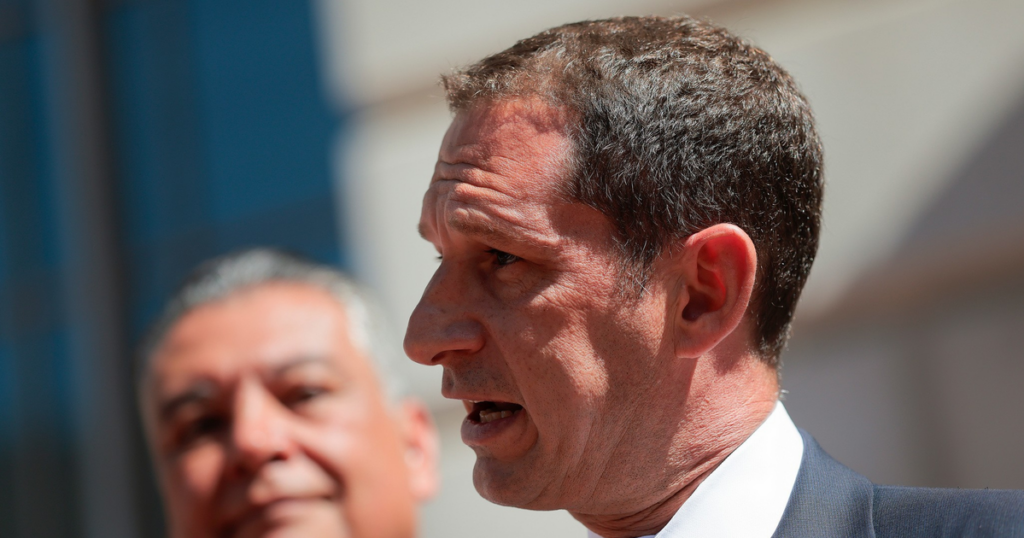
With housing scarce and the cost of renting an apartment skyrocketing, Mayor Daniel Lurie has declared a rent emergency Thursday.
Lurie called for measures that would delay evictions, limit landlords’ ability to increase rents, and provide more funding for nonprofit lawyers representing tenants in eviction cases.
“San Francisco is in a rent emergency,” Lurie said at a news conference at Alamo Square Park. “And as elected leaders in this city, we need to take action that meets the moment.”
The emergency declaration itself is largely a symbolic gesture. But it could establish Lurie’s housing agenda as a priority. Lurie similarly campaigned in 2024 on a promise to declare an emergency in response to the city’s fentanyl and opioid crisis.
“Today, most San Franciscans feel our city is finally moving in the right direction, but many are also asking whether they can still afford to live here,” Lurie said in a statement. “Today, we are taking action to tackle San Francisco’s rent emergency head-on and help San Franciscans stay in their homes.”
Among the ideas the mayor supports is a proposal by Supervisor Jackie Fielder to block landlords from evicting tenants who owe less than a month’s rent. He also wants $3 million to pay for lawyers to represent 400 households facing eviction proceedings, an additional $3,000 to be paid to tenants displaced by the Ellis Act, and other protective measures.
More than 1,000 eviction notices have been filed this year in San Francisco, putting it on pace for the most in nearly a decade, Lurie’s office said.
Rent increases in rent-controlled apartments would be capped at 10% per year for banked rent under proposed legislation from Supervisor Danny Sauter that Lurie supports. Banked rent refers to the practice of landlords who delay raising the rent for a year or more, but then attempt to demand a steep increase in the future. Tenants would get annual reminders about the annual rent increase maximum and rules regarding evictions under legislation sponsored by Supervisor Matt Dorsey.
“This moment calls for stronger action to keep longtime residents in their homes, free of harassment and clear of devastating surprise rent hikes,” said Sauter.
The backdrop is a city caught between two narratives. Labor leaders have warned that restaurant workers, hotel staff, and first responders are being priced out entirely, even as the mayor leans on corporate and high-income growth to fuel the recovery.
In San Francisco, the average rent for a one-bedroom apartment is more than $4,300, up more than $1,000 from last year, according to Zillow (opens in new tab).
Asking rents for apartments citywide rose 14% from March to July, according to Apartment List data cited in a report from the city’s Office of Economic Analysis.
The city has been slow to build homes and apartments, prompting Lurie last year to push through his Family Zoning Plan, which allowed for denser residential construction in many areas. Still, only 489 units have been completed this year, according to city data. (opens in new tab)
Median rents in the city are now more than double the national average, and in neighborhoods like Alamo Square, rents have jumped substantially.
Housing advocates have spent months pushing Lurie to use an emergency declaration to accelerate housing construction. They say a declaration could streamline production, waive impact fees, and unlock reforms such as allowing certain buildings to operate with a single stairway instead of two — measures they say could lower costs and make it easier to build housing.
Correction: An earlier version of this story mischaracterized the rental limit proposed by Supervisor Danny Sauter. His proposal would cap increases in rent-controlled apartments to 10% for banked rent.