
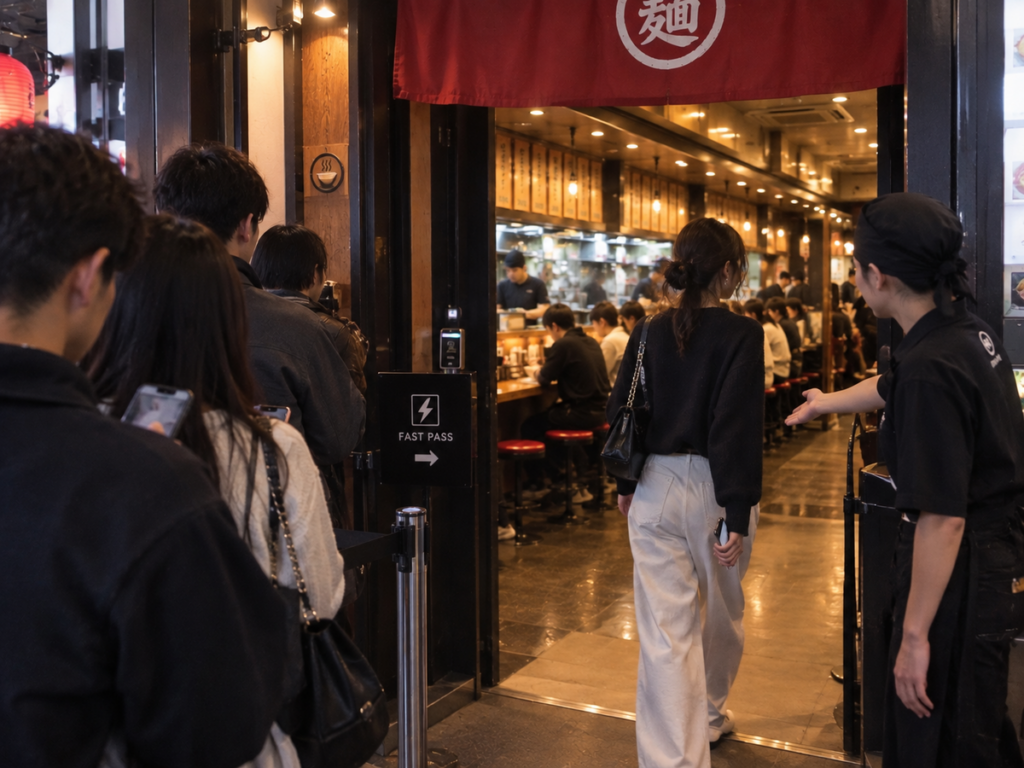
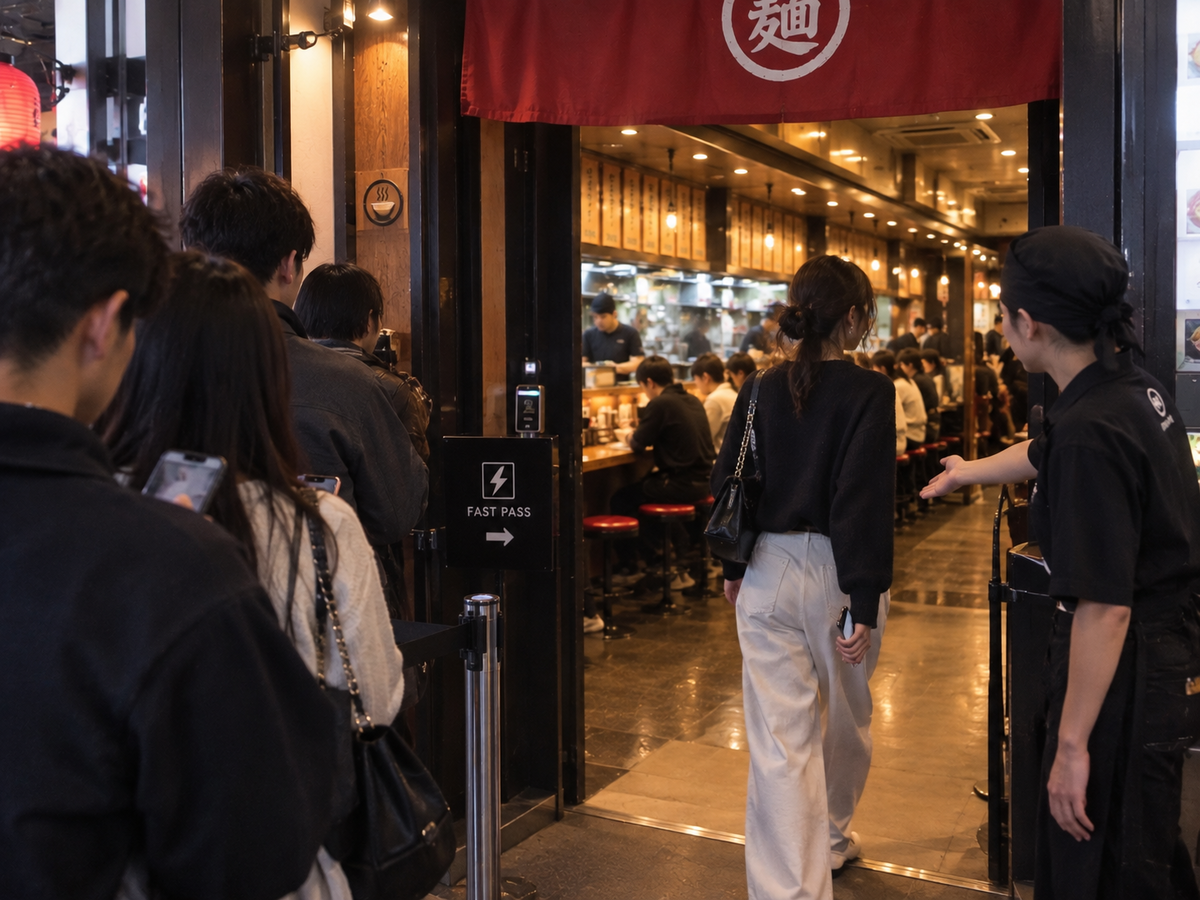
 An AI-generated image to help illustrate the article. Tool provided by ChatGPT
The “fast pass,” once found only at theme parks, is working its way into everyday life in Japan. As restaurants roll out services that let customers skip queues for an extra fee, more consumers are opening their wallets to shorten their wait.
750 Yen to Enter First at a Ramen Hall; 111 Sites Nationwide
Tokyo Ramen Yokocho, located in an underground shopping arcade near Tokyo Station, operates a priority-entry system that lets customers jump the queue for an extra fee, the Tokyo Shimbun reported on the 29th. Customers buy tickets on a website, with prices starting at 500 yen (about 4,200 won) per person depending on how crowded the restaurant is.
An office worker in their 20s whom the Tokyo Shimbun recently interviewed paid an extra 750 yen (about 6,400 won) and entered after passing 15 customers who had lined up ahead. In effect, the customer bought time with money.
Similar services are spreading in areas crowded with tourists. A restaurant in Mihama, Aichi Prefecture, introduced a priority-entry system last year. Diners there can eat kettle-cooked rice while looking out at the sea, and the standard wait reaches two hours on weekends.
“Customers whose wait is shortened end up with time to stop by tourist facilities or souvenir shops,” the restaurant said, voicing hopes that the system “can also lead to a boost for the local economy.”
The system used by these restaurants was developed by Japanese company Suisui. Since the service launched in October 2023, 111 locations nationwide are now using it.
Fast Passes Started at Theme Parks and Are Spreading Into Daily Life
Priority passes became common first at amusement parks. Tokyo Disneyland sells “Disney Premier Access,” which lets visitors cut wait times by paying several thousand yen extra per attraction.
Spending to save time is most pronounced among younger people. In a survey by Japanese watch brand Seiko, 32% of respondents said they had paid money to cut wait times, as with fast passes. Among those in their 20s, the figure was 47.5%, or close to one in two.
The Tokyo Shimbun said that for consumers who prioritize time efficiency, using money to shorten waits is establishing itself as a new option. Ryo Hirose, a researcher at the NLI Research Institute, said: “More people feel burdened by waiting itself and think they are losing out if they are not making the most of the present moment.”
An official at Suisui also said, “We want a culture of buying time to take root even at restaurants, where waiting has long been taken for granted.”