
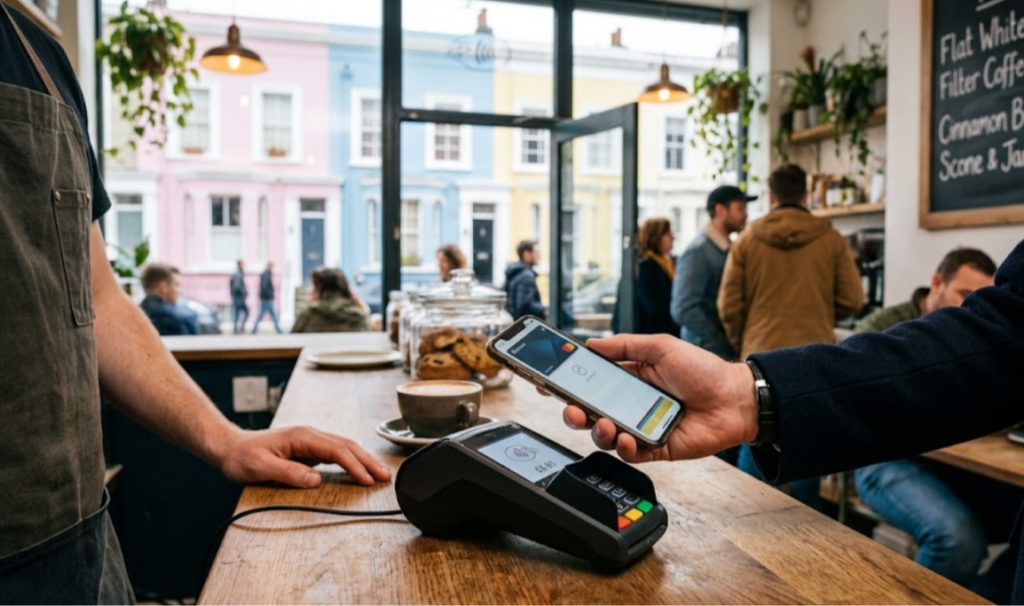
The bustling streets of West London, from Notting Hill’s vibrant markets to the polished boutiques of Kensington, are witnessing a profound financial transformation. Gone are the days when carrying a bulky purse full of coins was a strict prerequisite for a day out. Today, the rhythmic tap of a smartphone or contactless card against a modern payment terminal is the defining sound of local commerce. This sweeping shift toward electronic transactions has accelerated daily errands and fundamentally altered consumer behaviour, driving fierce innovation across both physical retail environments and virtual storefronts.
As consumers increasingly prioritise instant, secure transactions, modern payment gateways have expanded well beyond physical shops and into the expansive realm of online entertainment. Whether locals are buying an artisanal flat white in Hammersmith or exploring international platforms like Irish casino hex to read comprehensive reviews and discover new iGaming experiences, the demand for seamless financial transactions remains universal. This widespread adoption of electronic wallets reflects a broader cultural embrace of frictionless commerce, where individuals expect the exact same robust security whether engaging in casual online gaming from their living room or settling a restaurant bill in Chelsea.
The Decline of Physical Cash on the High Street
Recent industry data paints a stark picture of the United Kingdom’s aggressive transition toward a completely cashless society. According to authoritative reports on payment markets published by leading financial bodies, cash usage has plummeted dramatically. By 2024, it was reported that physical currency fell to represent less than ten per cent of all payments across the country for the very first time. In West London, independent retailers and pop-up food vendors who once relied exclusively on physical currency have rapidly adopted mobile point-of-sale systems merely to survive and accurately cater to a modern demographic.
The primary driving force behind this dramatic decline in cash is the meteoric rise of mobile wallets. Recent national statistics forcefully indicate that over fifty-seven per cent of UK adults now regularly utilise mobile wallets for their daily spending, a figure that continues climbing year on year. For ambitious businesses operating in fiercely competitive areas like Fulham or Shepherd’s Bush, accepting modern contactless methods is an absolute baseline for adequate customer service. The unadulterated convenience of double-clicking a phone to pay has successfully rendered the physical wallet increasingly obsolete for busy urbanites.
Seamless Commuting Across the Capital
Nowhere is the sheer impact of cashless technology more visible than on the capital’s sprawling public transport network. Transport for London has been a global pioneer in integrating contactless technology, permanently changing how residents commute. Since its introduction, over 2.5 billion bus journeys have been made using pay-as-you-go contactless bank cards or smart devices. For West Londoners navigating the District or Central lines, the normalisation of simply tapping in and out has blissfully eliminated the dreaded need to queue for paper tickets or constantly remember to top up physical travel cards.
This remarkably seamless commuting experience sets a high psychological benchmark for all other transactional interactions in a Londoner’s day. When a commuter can traverse one of the world’s largest cities with a simple flick of their wrist at a ticket barrier, they understandably lose patience with cumbersome payment processes elsewhere. This expectation of absolute immediacy ripples outward, continuously pressuring both local brick-and-mortar stores and digital service providers to significantly optimise their own payment gateways to match the relentless speed and efficiency of the transport system.
The Expanding Landscape of Online Entertainment
The entertainment and iGaming sectors are simultaneously major beneficiaries and primary drivers of this ongoing payment revolution. As residents seek thrilling leisure activities directly from the comfort of their homes, they naturally turn to online platforms offering sophisticated payment ecosystems. The online casino industry is a massive economic force in the United Kingdom, generating billions in gross gambling yield annually as player engagement reaches unprecedented levels. This immense commercial scale is heavily supported by the frictionless deposit and withdrawal methods that modern financial technology affords, allowing users to seamlessly fund their accounts.
Security is obviously paramount when real money is actively involved in remote environments. Electronic wallets and instant bank transfers are heavily favoured by modern iGaming enthusiasts precisely because they act as a secure buffer between personal bank accounts and third-party platforms. By intelligently utilising advanced data encryption and strict biometric authentication, these modern payment methods provide absolute peace of mind. Players can therefore comfortably focus their attention on the entertainment value of their chosen games, fully knowing their highly sensitive financial data is stringently protected by rigorous regulatory standards and robust cybersecurity.
Expert Perspectives on iGaming Transactions

To truly grasp the complex intersection of financial technology and consumer entertainment, one must closely analyse the specific demands of the modern, tech-savvy user. Jana Yarrow, iGaming expert and author at Online Casinos CasinoHEX UK, perfectly encapsulates this shifting dynamic. “The rapid evolution of payment methods has fundamentally transformed how players interact with online platforms,” she notes. “Today, players expect instant deposits and swift withdrawals without ever compromising on security. Platforms that fail to offer a diverse, robust suite of electronic payment options are simply left behind in this highly competitive market.”
Yarrow’s observation highlights a critical underlying truth about the modern economy: customer loyalty is now intrinsically and permanently linked to transactional convenience. If an online entertainment platform, or indeed a local high street retailer, introduces unnecessary friction at the crucial checkout stage, the frustrated consumer will swiftly take their lucrative business elsewhere. This unyielding competition forces continuous, rapid innovation, ensuring that only the most user-friendly, completely transparent, and lightning-fast payment systems ultimately survive and thrive in the modern commercial marketplace.
Key Benefits Driving the Cashless Transition
The rapid shift away from physical currency is not merely a fleeting technological fad; it is driven by tangible benefits that significantly improve daily life and streamline business operations. Both everyday consumers and hardworking merchants throughout West London are actively reaping the rewards of this highly interconnected financial ecosystem. Consider the primary advantages encouraging the widespread adoption of electronic payments:
Enhanced Security: Electronic transactions are rigorously protected by biometric data, such as facial recognition or fingerprint scans, making them vastly safer than carrying large sums of physical cash.
Unprecedented Speed: Contactless technology drastically reduces frustrating queueing times at tills, allowing bustling cafes and local pubs to successfully process a much higher volume of customers.
Superior Hygiene: Tapping a personal device completely eliminates the unsanitary need to constantly handle heavily germ-laden bank notes and metal coins.
Effortless Record-Keeping: E-wallets automatically categorise daily spending, instantly providing users with invaluable insights into their personal budgeting and financial habits.
These compelling advantages collectively explain exactly why cashless transactions have successfully moved from being a convenient novelty to an absolute standard in modern British society. Consumers simply refuse to compromise on security and speed when managing their money. Whether splitting a dinner bill in Soho or funding an online gaming account, the fundamental requirement for quick, frictionless financial movement remains identical.
Popular Payment Methods in the iGaming Sphere
Just as local high street shops must cleverly diversify their payment options to capture every potential sale, online entertainment platforms must meticulously cater to highly varied user preferences. The dynamic iGaming sector is particularly adept at seamlessly integrating cutting-edge financial tools to comfortably accommodate an audience with diverse banking habits. The most prominent methods currently reshaping the online landscape include:
E-Wallets: Innovative services like PayPal and Skrill heavily dominate the sector due to their incredibly rapid processing times and the enhanced financial privacy they consistently offer.
Open Banking: This revolutionary technology allows for direct, instant transfers from a user’s bank account to a merchant, completely bypassing traditional card networks and reducing processing fees.
Prepaid Cards: Established options such as PaysafeCard remain incredibly popular for budget-conscious players who wish to tightly control their leisure spending without linking a primary bank account.
Mobile-Specific Solutions: Apple Pay and Google Pay are increasingly being integrated directly into casino apps, providing a native, one-tap deposit experience.
By offering this comprehensive selection of varied financial pathways, modern platforms actively ensure that every player can confidently transact in a manner that perfectly suits their lifestyle. The iGaming industry’s proactive approach to adopting new payment technologies often serves as a reliable barometer for broader commercial trends, previewing the frictionless financial interactions that will soon become commonplace across all sectors.
Navigating the Challenges of Financial Inclusion
Despite the overwhelming momentum toward a fully cashless society, it remains absolutely crucial to carefully acknowledge the potential social pitfalls of this rapid transition. In richly diverse boroughs stretching right across West London, there unfortunately remains a distinct segment of the local population — often older residents or those in vulnerable financial situations — who still actively rely on physical cash. For these individuals, the distressing disappearance of local bank branches and free-to-use cash machines poses a highly significant threat to their financial independence.
Therefore, pursuing truly responsible financial innovation necessitates a highly balanced, empathetic approach. While aggressively championing the undeniable speed and formidable security of modern mobile wallets and online payment gateways, local businesses and governing authorities must strictly ensure alternative, inclusive payment methods securely remain accessible. True progress within the financial sector fundamentally means thoughtfully elevating the overall user experience without accidentally disenfranchising those who are simply not yet ready to make the difficult leap to completely electronic banking.
Looking Ahead for West London Consumers
The future trajectory of West London’s vibrant commercial landscape is irrevocably tied to the continuous, rapid evolution of global payment technology. As biometric authentication systems become even more sophisticated and open banking regulations actively foster greater commercial competition, the remaining friction of transferring money will inevitably continue to approach zero. This beautifully seamless environment will undoubtedly further blur the historical lines between offline retail and online commerce, creating a highly cohesive ecosystem where spending is entirely intuitive and beautifully instantaneous.
Ultimately, whether a local resident is hastily navigating the chaotic morning rush hour on the Tube, purchasing fresh groceries at a bustling market, or comfortably logging into a trusted online platform for a relaxing evening of iGaming, the underlying financial machinery smoothly powering it all essentially remains the same. The ongoing refinement of these incredible payment systems firmly promises an exciting future where financial transactions are no longer viewed as a tedious chore, but rather as an entirely invisible component of everyday urban life.