
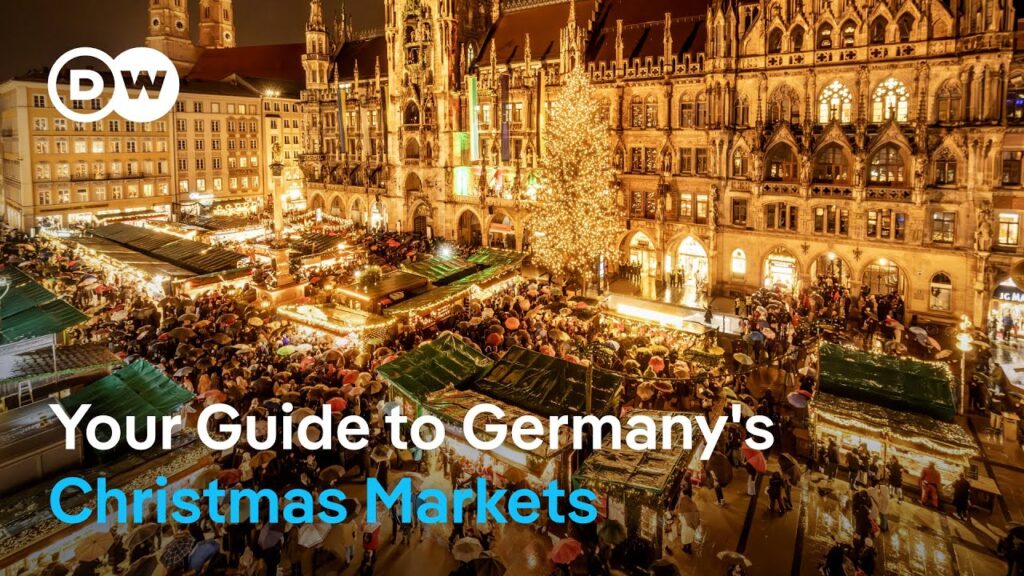
German Christmas Markets: Classics, Highlights and Special Locations
For many of us, Christmas is
the most magical time of the year. And in Germany, that magic
begins when Christmas markets open in late November. It feels magical. The traditions, the colors… The smells, the sights, the people… It’s just wonderful – wunderbar. It’s a time to meet friends, buy
some gifts and eat delicious foods. Glühwein is nice, Wurst is nice. The nuts that you have here. I like the Lebkuchen here. There are about 2,500 Christmas
markets in Germany to choose from. We’ll show you some of the
most beautiful and famous ones. And tell you which folkloric figures
you’re likely to meet there and where. Introduce you to
delicious regional specialties. And show you what happens when
things heat up and get a bit wild. So stay tuned! Let’s start with some highlights and record setters. The most visited
Christmas market in Germany is at the foot of the Cologne Cathedral. According to organizers,
around 5 million people visit every year. Even though the market looks
historic, it’s actually a newcomer. It’s only been around since 1995. Germany’s oldest Christmas market
is the Striezelmarkt in Dresden. It dates back to 1434. Back then, the market was only held
for one day, but nowadays it lasts for about four weeks. Here, it’s all about the
Striezel, or Dresden Christmas stollen. More on that later. The country’s largest
Christmas tree is 45 meters high and stands in the city of Dortmund. However, it’s not cut down in
the forest, but rather made of 1,200 smaller red spruce trees. Putting it together takes 4 weeks! But once it’s been decorated, it’s the undeniable star of
the city’s Christmas market. And this is where the world’s
tallest Christmas “candle” is being made. All you need is a 42-meter-high tower, cover it with red fabric,
deck it out with lights and voilà! This creation got the
small Hessian town of Schlitz into the Guinness Book of Records. Berlin is also on the list
of Christmas market highlights. The city hosts around 90 Christmas markets, more than any other German city. There are the classics like
the Christmas market around the Neptune fountain. Or the one at the Kaiser
Wilhelm Memorial Church. But there are also many small
markets spreading Christmas cheer in the bustling capital. Many markets are closely
linked to folkloric figures. Like Santa Claus! He brings gifts to children, especially in northern and eastern Germany. But in southern Germany,
you’re more likely to find the “Christ Child” or “Christkind”, especially in Nuremberg. It’s with these words
that the Christkindl opens the Christkindlsmarkt
in Nuremberg every year. It’s world-famous! I’m from Lebanon. Romania. Japan. St. Louis, Missouri. From Turkey. I’m from India. From Amman. USA, Utah. Finland. We continue to Rothenburg ob der Tauber. Here the “Reiterle”,
a figure from the Middle Ages, who is said to bring good luck, opens the Christmas market each year. And that’s why – surprise, surprise – the market is also called the “Reiterlesmarkt.” With its medieval architecture,
Rothenburg is truly romantic, especially around the holidays. Another interesting tradition
takes place in Munich, the so-called “Krampuslauf.” Krampus are pagan figures that belong to the traditions of the Alpine region. In the past, children were often told
that they’d be punished by the Krampus during the Christmas
season if they were naughty. Today, they provide plenty of
fun for young and old alike. I think it’s amazing. We absolutely love Germany
and we’re really excited to see this first time. So yeah, really excited. But don’t worry, these wild guys
only cause mischief for one day. The rest of the time,
Munich Christmas market is a peaceful, traditional affair. Expect mulled wine, Bratwurst and the
typical Christmas market delicacies. There are also some regional specialties you’ll only find in certain cities. Aachen is famous for its Printen. It’s a special type of
gingerbread that used to be hard, making it ideal for long storage. Modern versions come in both
hard and soft varieties and in many shapes. The name comes from the practice of
pressing the dough into carved molds, which “printed” designs onto the cookies. Nuremberg’s typical
gingerbread is soft and moist. It’s called “Elisenlebkuchen.” According to legend, a Baker
made it for his sick daughter Elise in the Middle Ages. He used very little flour
and lots of nuts and spices. As the story goes, it cured his daughter – a happy ending! Kale is a typical north German winter dish. It’s harvested after the first frost,
and its vitamin and mineral content makes it a healthy option. It’s usually served
with sausage or other meat. It’s definitely hearty. Now back to the famous Dresden specialty: “Striezel”, or Dresden Christmas stollen. The yeast dough consists mainly of
butter, flour, candied orange peel, almonds, candied lemon
peel, raisins and lots of sugar. Every year, Dresden bakers make a giant stollen. The proceeds from the pieces
they sell are donated to a charity. Tradition is very important at
most German Christmas markets, but: You’ll also find some unconventional – and even risque – Christmas markets, too. Let’s check out the erotic Santa
Pauli Christmas market in Hamburg, where the focus is fun and frivolity. It’s fittingly held in the Reeperbahn, Germany’s most famous red light district. This famous market started in 2006 and its concept has
even caught on in other cities. For example, Berlin’s
Nollendorfplatz station has been hosting “Christmas Avenue” since 2019. The queer community really
gets into the holiday spirit here. And the mulled wine
might be a little extra warm. The gifts are unique. Admission is for anyone 16 and over. And did you know that at one
Christmasmarket you can even bathe in public in a wash tub? That’s at the Christmas market in Esslingen, which is dedicated to the Middle Ages. People travel from far
and wide to check it out, like these visitors from Canada. It’s very nice, very warm. I was expecting a lot of people
watching it and that’s what I got. Sitting in the middle of a Christmas
market in a hot tub is pretty special. But even if you don’t want to take a dip, the Christmas market
in Esslingen is worth a visit. A medieval town like this
really provides the perfect backdrop. But… Germany also has some Christmas markets and places you wouldn’t expect. The lines of visitors in
front of the training mine in Recklinghausen are long. The underground Christmas
market, 17 meters below ground, is truly something special. Surrounded by miner’s lamps,
steel struts, and mining equipment, visitors must wear helmets. That’s because Recklinghausen
is part of the Ruhr region, which has a long history of mining. The atmosphere is especially festive
when castles and palaces transform into Christmas markets. Merode Castle in the
Eifel region is a perfect example. The atmosphere is traditional and serene. Every day, the Christkind makes an
appearance and sings Christmas carols with the visitors. It doesn’t get any
more romantic than that. It’s enough to melt the Grinch’s heart. And there’s no better setting
than the 40-meter-high railway viaduct in the Ravenna Gorge in the Black Forest. This Christmas market is extremely popular, but you do need a ticket to attend it. And this year they’re already sold out. Better luck next year! So, which Christmas
market was your favorite? Do you prefer large or small? Bustling or tranquil? And which ones have you already visited? Let us know in the comments. We look forward to hearing from you!
Every year, Germany boasts around 2,500 Christmas markets, more than any other country! We’ll share everything you need to know: the most beautiful, popular, and unusual markets, the types of food available at each, and the traditions that characterize each region. Which German Christmas markets have you already visited? Let us know in the comments!
00:00 Intro
01:04 Superlatives and record setters: Cologe, Dresden, Dortmund, Schlitz, Berlin
03:02 Folcloric figures: Santa Claus, the Christchild, the Reiterle and the Krampus
05:06 Regional specialties: Printen, Elisenlebkuchen, kale and striezel or Christ stollen
06:48 Unconventional & hot markets: Santa Pauli in Hamburg, Christmas Avenue in Berlin, Hot tub in Esslingen
08:19 Unique locations: Recklinghaisen
CREDITS:
Report: Kerstin Schmidt
Edit: Klaus Hellmig, Sebastian Ziegler
———————————————————————————————————————–
Subscribe to DW Travel
youtube.com/dwtravel
Would you like to find out more about DW Travel?
▸Facebook: facebook.com/dw.travel
▸Instagram: instagram.com/dw_travel
DW Travel is showing you the captivating world of travel. Come along with us to regions and cities in Germany, throughout Europe and to far-away destinations.
#christmas #christmasmarket #germany #cologne #dresden
17 Comments
Italian markets are amazing too
Danke from 🇺🇸!
All the markets in Germany are beautiful. I will return one day to enjoy again
I wish I were there.
I wish I could go to Christmas market
Hide them from Abduls and Mohammads 😂😂
SWEET VIDEOS ❤❤❤❤🎉🎉🎉 SWEET PRESENTATION ❤❤❤🎉🎉❤❤❤🎉🎉❤❤❤
Wanna visit Germany .the culture is so interesting .but have heard with the mass Islamic migration has kind changed the German country with certain things .
Try not to get killed by some migrant! 😂😂😂😂😂
👍🎥🙏🏻👌✌💐👏
❤❤❤❤❤
The Ultimate goal is to relocate and settle the population of the Middle East to Europe and establish a Greater Israel.
Whenever Christmas comes near,the first thing that comes in my mind is "German Christmas Markets" but for some other reason😂😂😂
My tip… learn to dodge, roll, run, and take cover.
So beautiful from Cossimbazar WB
Rasagem 😮 Европейцам надо ещё поучиться у Востока ❤ ещё раз Европе надо ещё поучиться ❤barbarossa
where are Allah Akbar's ?