






Arpège is one of those “love it or hate it” restaurants. Oh, the number of rolled eyes I’ve seen when I say Arpège is one of my favourite restaurants in the world…
I could go on and on about what makes Alain Passard’s cooking so great, but I’ll try to keep this short and focus on my latest visit: my 9th over the span of 10 years, and the first since the restaurant transitioned to an entirely “cuisine végétale.”
As many of you may already know, Passard announced last year that Arpège would no longer serve “cuisine animale.” Deviating from cuisine animale also means deviating from dairy products, including cream, cheese, and butter, the essentials of the French pantry. The only exception to this rule is honey from their beehives.
My preferred approach at Arpège is more or less the same as pre-switch: go for the prix-fixe menu déjeuner, then add one or two demi-portions à la carte, depending on what catches your interest.
This visit was in early autumn, so the menu highlighted the season’s last tomatoes.
Pic 1. Quite the protagonist. Good the see the chef himself back in the kitchen, now that the stakes were higher than ever (this was before they retained their 3 stars).
Pic 2. Vegetables from their gardens to nibble on
Pic 3. Ratatouille fantaisie “fin de saison”, sabayon aubergine Clara: matignon de courgettes.
A very poetic name for what was technically a tomato gazpacho with red pepper sauce and roasted aubergine sauce.
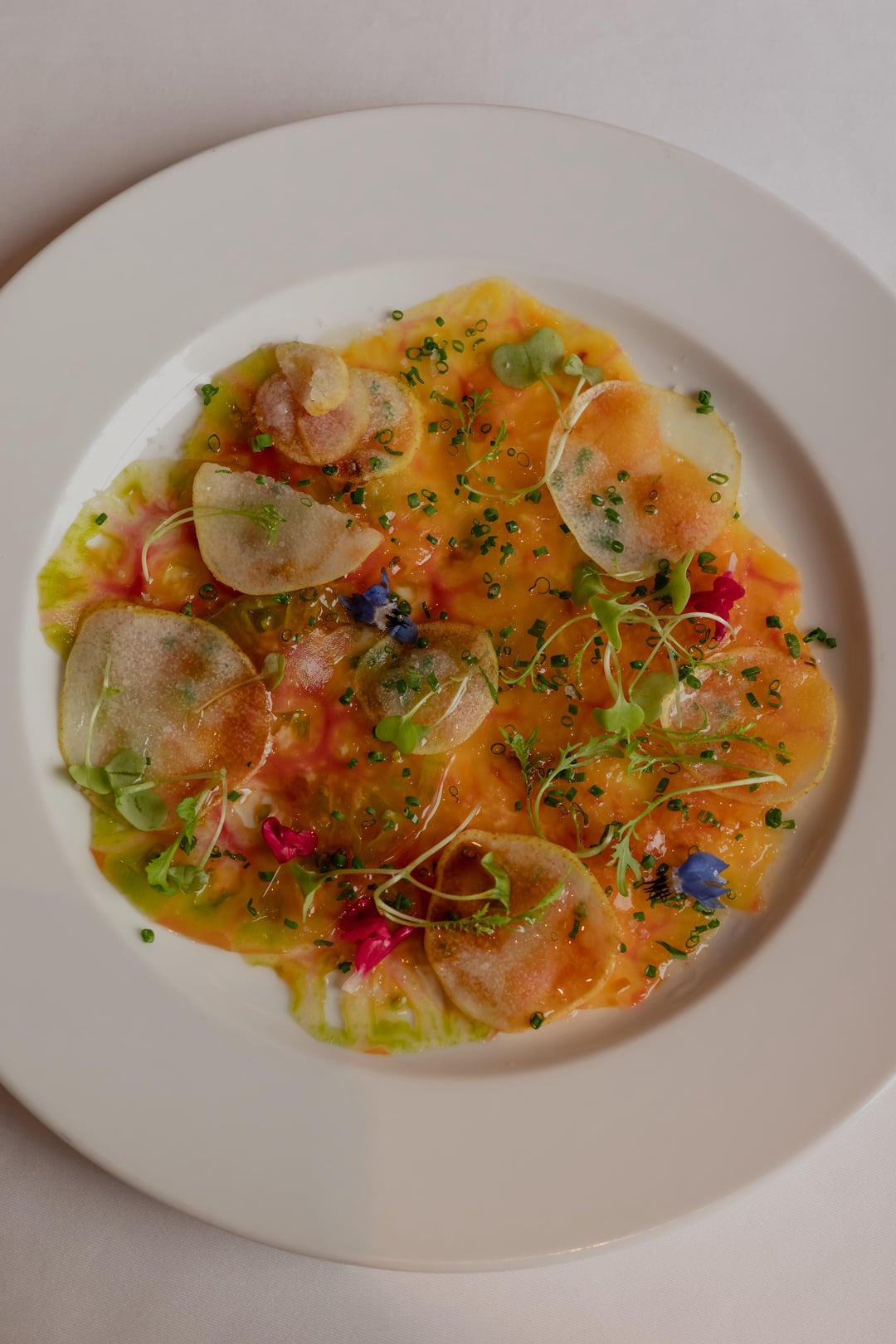
Pic 4. Carpaccio chassé-croisé: les dernières tomates, les premières poires.
The original prix-fixe menu listed a radish carpaccio (Marqueterie d’automne: choux-rave, navet mauve, radis rouge et noir), but I asked whether the kitchen could change it to a tomato carpaccio because 1) I had had the radish carpaccio here before, and 2) we don’t have excellent tomatoes where I’m from, so I wanted to douse myself in tomatoes, which I’m very glad I did. I liked the gentle aroma of fig leaf infused into the rapeseed oil, as he used to do in his legendary carpaccio de langoustines.
Pic 5. TrésOrs dorés du potager: cidre, miel & colza.
A wordplay on trésors (treasures) and trés ors (three golds): cider, honey, and rapeseed, the ingredients of the sweet-and-sour vinaigrette. Passard used to serve this vinaigrette with homard bleu; now it is served on a salad of beans, leaf greens, beetroot, and figs.
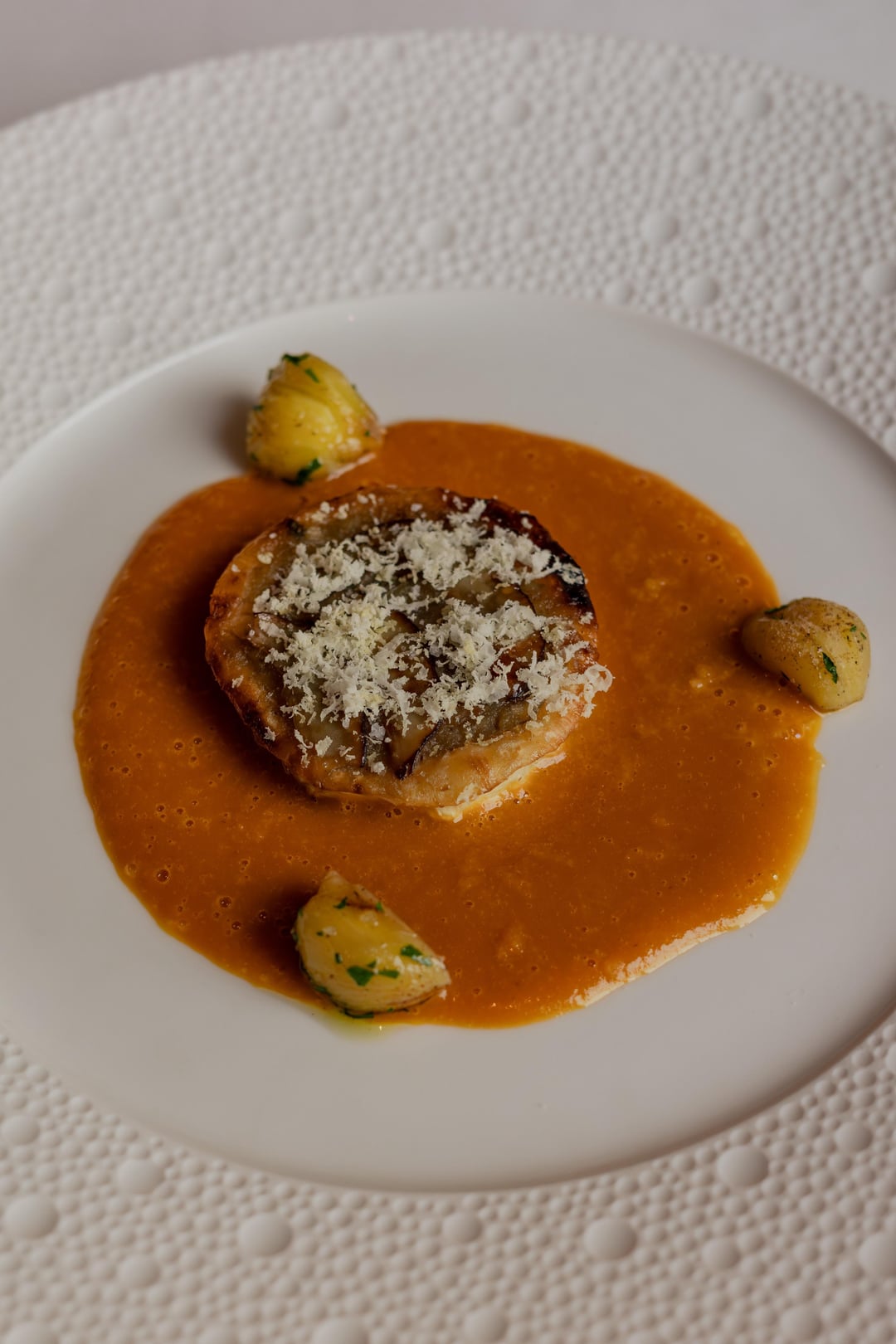
Pic 6. Les trois “C”: écrin de céleri-rave, pétales de cèpes, éclats de châtaignes.
Celeriac stuffed with cèpes and chestnuts on a gentle tomato sauce.
Pic 7. Fleurs d’endives et pommes feuilletées à l’oseille: miroir carmin à la betterave.
Roasted, then braised endive on a beetroot sauce as glossy as a mirror, hence the name miroir. The sorrel brings a wonderful acidity here. Perhaps his hommage to the legendary saumon à l’oseille.
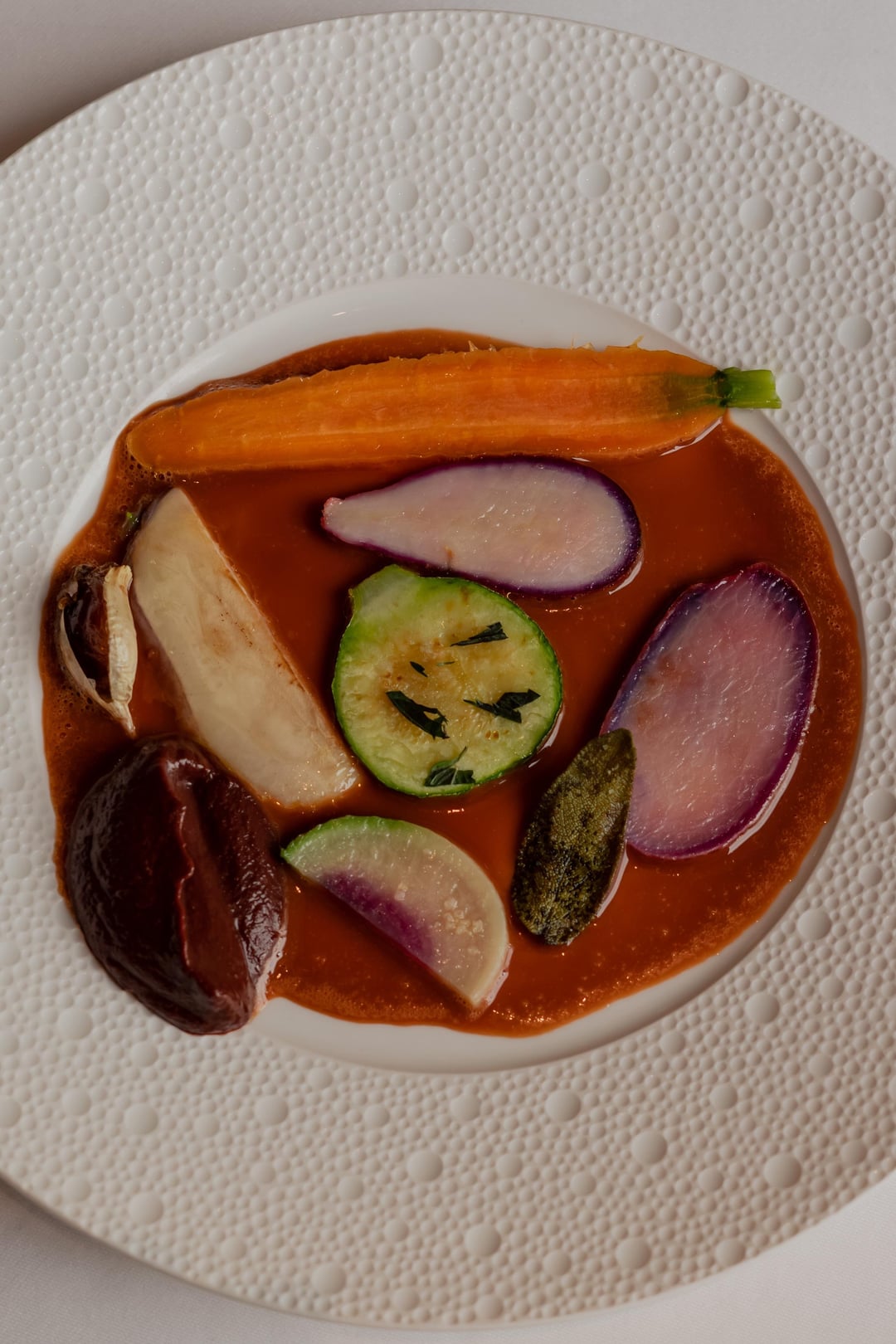
Pic 8. Collage et coloriage: arlequin du jardin.
Matisse on a plate. As some of you might know, Alain has his non-edible artwork on display at the atelier next door, including bronze sculptures, paintings, and collages. This edible collage included roasted radish, carrot, courgette, garlic, and concentrated tomato purée on, you guessed it, more tomato mousseline.
Pic 9. Cèpes du Massif Central à la Bordelaise: châtaignes du Bois Giroult.
Added from the à la carte menu because it sounded sexy and damn, I’m absolutely glad I did. A dish of pan-fried cèpes perfumed with sage, rosemary, and thyme, served with a glorious sauce bordelaise. On the side were roasted potatoes stuffed with shallots and Swiss chard. This is peak Passard.
Pic 10. Tomate confite aux 12 saveurs: création 1986.
One of their signature desserts that was on the menu even before the switch. Needs no introduction, really.
Pic 11. Cognassier à la rose.
A quince sorbet on a sauce of red pepper and rose.
Pic 12. Green pepper and apple juice, tartlet of rhubarb and melon.
Now that I’ve waxed lyrical enough, here are some criticisms, if I may:
- Palate fatigue. The omission of cream, cheese, and butter makes the acidity and salinity more pronounced in some dishes than before, leaving a “rougher” feel overall. Although nothing was over-seasoned or over-acidified, it did gently wear down the palate throughout the course. I wish they would use a bit more oil or cook out the acidity in some of their sauces.
-
Tomatoes. I love them, but there was just too much tomato throughout the course, especially as a main component of the dishes. I must admit some of this is on me though, as I asked for the tomato carpaccio instead of the original radish. But then again, raw tomato is much gentler than, say, a gazpacho or tomato purée, and I doubt my feelings would have changed had I been served the radish carpaccio instead.
-
Value. The lunch menu used to be excellent value at under or around €200, with proteins like homard bleu, turbot, pigeon, and lamb served alongside a dozen or so dishes. You would get absolutely stuffed and leave feeling like you had just robbed a bank. Now, at €260 for what is essentially an eight-course lunch (not counting the crudités, mignardises, or the cèpes I ordered à la carte) composed entirely of vegetables from their gardens, you can’t help but wonder. I should also note that there are now some new Passard protégés on the block, like Èbène, offering amazing value with menus under €100 that include animal protein.
That said, will I return? Most certainly. There’s no one who does it like Alain Passard.
by matteroftastekr