




I had the delight of dining on the second day after the menu change at Alinea last week. Here is a review of my experience:
Act I: The Hive
The entire dining room is suffused with the warm, amber glow of candlelight. In the center of the room is a long table, covered with what looks like dripping beeswax and honey. On the table rests a sculptural piece of ceramic ware resembling a beehive, with layered concentric pieces stacked on top of one another, and before it, a single black envelope sealed with golden wax.
The kitchen is shrouded in darkness. All of a sudden, the lights glimmer on, and orchestral music starts to play. We are asked to break open the seals on the envelope, where we see a list of seven courses, all inspired by bees and honey. The servers, in unison, lift the top of the Hive, and the dinner begins.
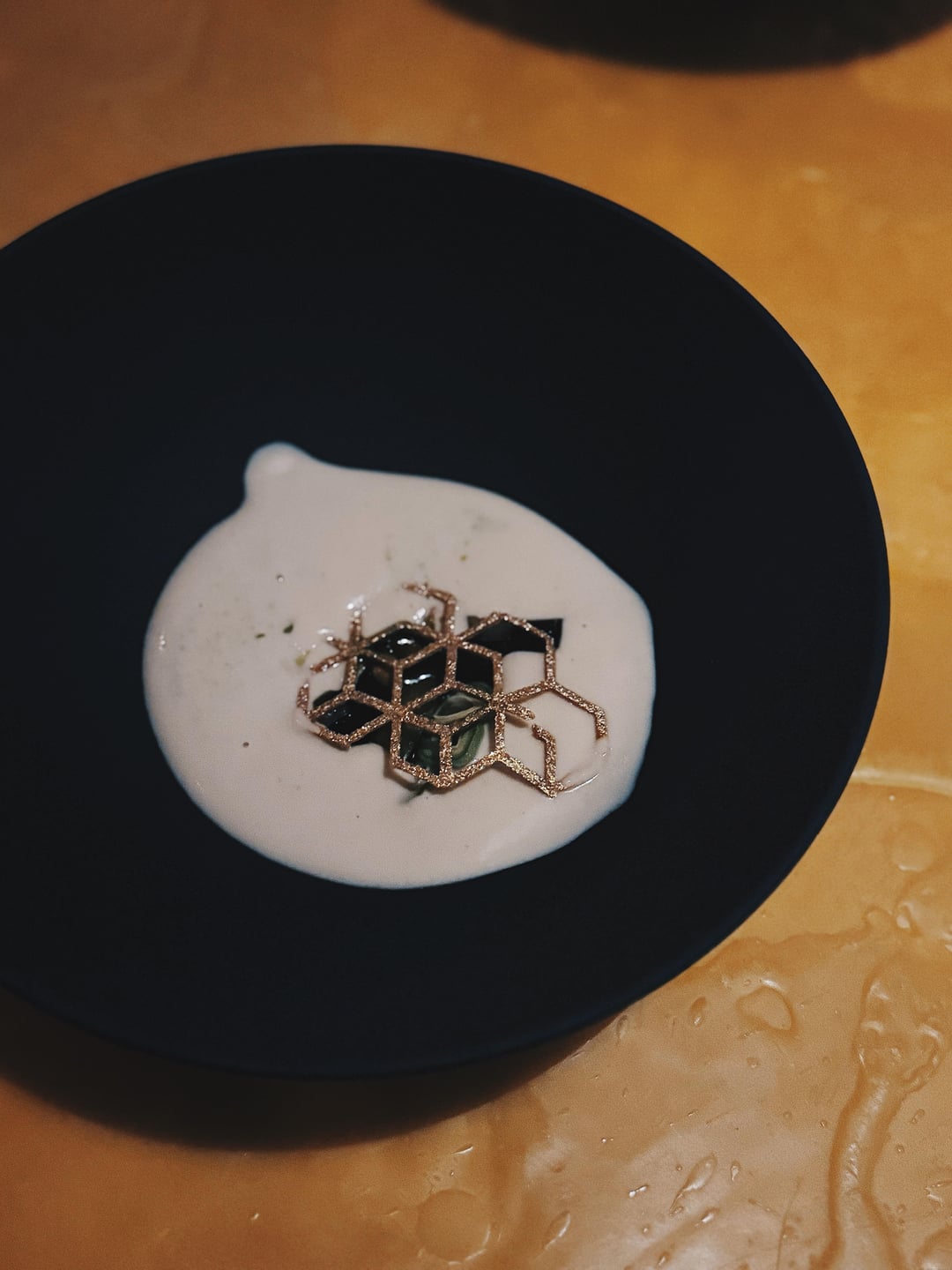
- Spring onion cream, sweet and sour ramps, charred ramp top butter, nuggets of golden honey, amontillado sherry: One of my favorite dishes, and a fantastic start to the night. Creamy, fresh, with pops of sweetness from the honey nuggets and slightly acidic ramps.
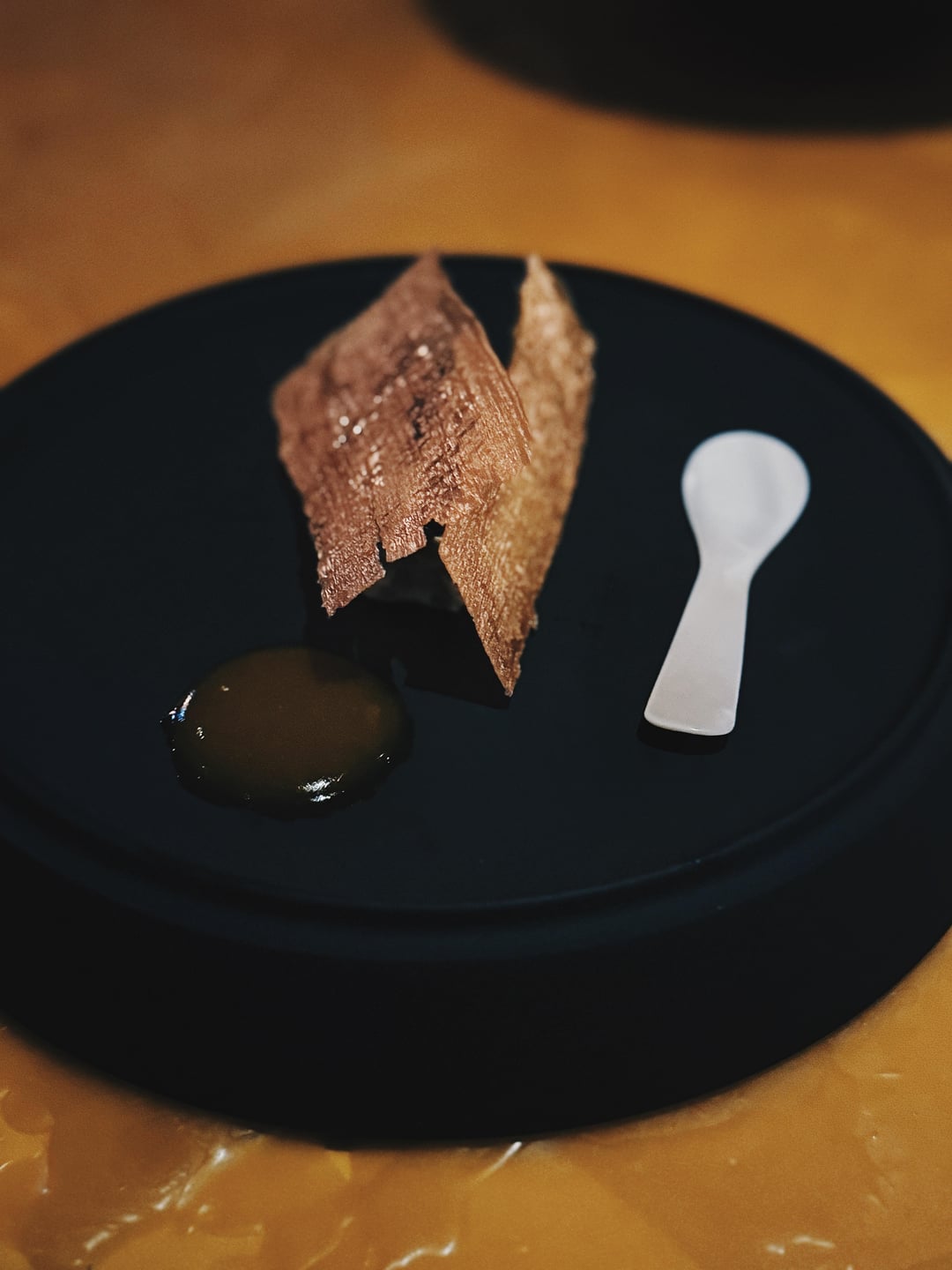
- Regiis ova osetra caviar, with 2-month aged délice de bourgorgne, french chamomile honey and transparent leeks: The honey is divine—locally-produced, saccharine and floral—but to be honest, délice de bourgorgne is one of my least favorite cheeses, so I don’t like the dish on my first initial bite. The cheese is a tad too rancid and malodorous for my liking, seemingly overpowering the rest of the dish. But once I try pairing the leek (a very thin, almost translucent cracker that shatters in your mouth when you bite) topped with a small dollop of cheese, and top it with caviar and a swirl of honey, I’m surprised by how the flavors intermingle together.
- Preserved trumpet mushroom, jícama, toasted coconut vinaigrette, papaya confit in local honey: The preserved mushroom had an interesting pickled flavor, though the flavors of the jícama and papaya were rather light. The coconut vinaigrette had a sweet, creamy and toasted flavor, reminiscent of kaya jam (a coconut custard common in Southeast Asia)
- Confit abacaxi pineapple, jamón ibérico bellota, whole grain mustard oxymel, and opal basil buds: Oxymel is a medicinal syrup made of honey, vinegar and herbs, and I thought a very nice nod to the honey/bees theme. The pineapple was served as a flat, thin circle alongside a pair of silver tweezers, and we’re instructed to fold it over like a taco and consume the whole thing in one bite.
- Alpine sorrel leaf and frescura blooms, with honey and propolis droplets: This dish was a little awkward to eat (I had to precariously lift the sorrel leaf); flavors were rather forgettable.
- Shattered giant white european asparagus with roasted michigan straw cream, charred strawberry and niçoise olive compote, and caramelized honey: The straw cream is the most intriguing part of this dish; earthy, slightly sweet and almost vanilla-esque. The asparagus, however, is disappointing. It has a dry, desiccated texture that reminded me of rusk. Perhaps I’m being a bit harsh but personally, I feel dehydrating the asparagus is a waste of the beauty of such a fresh spring ingredient. It was more of a medium for the sauces, but even then, rather flavorless and added nothing to the dish.
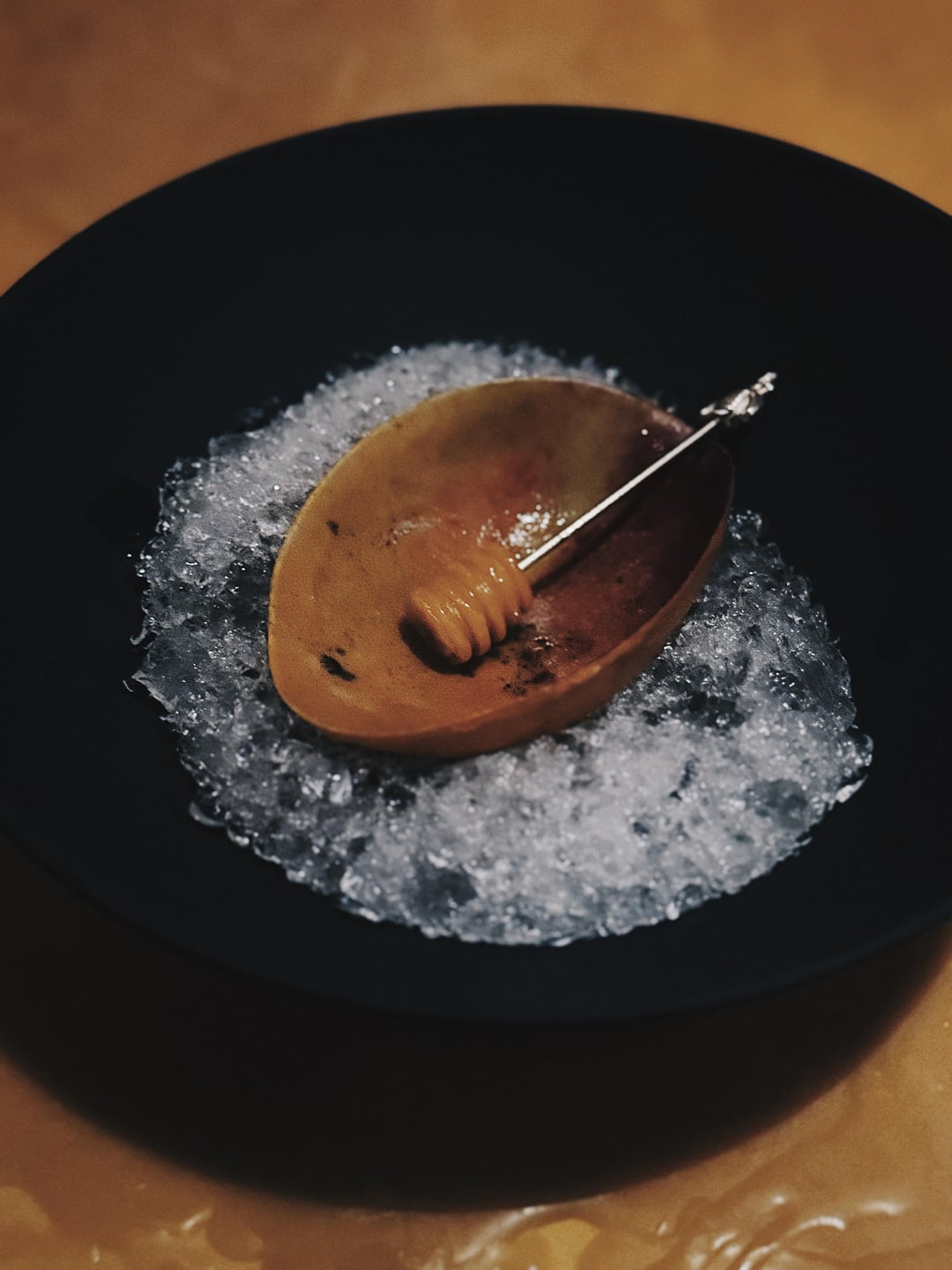
- Wax mango, made from ataulfo honey mango and organic beeswax: This is a sweet dessert, a little chewy mango confection on a stick. (The mango skin is coated with wax and not edible—I asked.) I wish I could have said more about this dish, but unfortunately, we were rushed at this point from the end of the small bites to the kitchen, and I had to hastily stuff it in my mouth and wasn’t able to appreciate or savor the flavor.
Intermission
After the first few bites, we are ushered inside the kitchen. We line up by the counter, where a curious metal contraption is placed. We are told it is an imperial shaker, a vintage hand-operated cocktail shaking machine (one of the eight in the world, apparently). The chefs demonstrate the machine and make a cocktail on the spot for the guests. My dining partner and I were doing the non-alcoholic pairing for the night, and while I found it thoughtful that they gave us a non-alcoholic mocktail made with mugicha, plum, pickled ginger and sudachi, I wished they could have asked beforehand and given us the option to try the alcoholic version that was made in the machine. Lined along the counter were a few plastic tubes and we were told to reach in, on the count of three, to a duck leg tsukune and salted plum skewered on a juniper branch. (If I’m being honest, the dish, which was dubbed “Fear Factor,” was a little gimmicky, and I didn’t see how the act of pulling something out from a tube contributed to the “fear factor” personally.) My friend thought the duck was too salty; I found it acceptable. It was a slightly smoky, flavorsome meatball on a stick, reminiscent of Japanese yakitori.
Act II: The Main Act
We proceed into the main dining room again, where the long communal table has been magically vanished, replaced with regular tables for each party. We are served the first of the main courses:
- Skatewing à la pharos siamois, fermented green peppercorn, tamarind, and bai horapa (Thai basil): This was served on a dramatically large platter, with a small morsel of skatewing brushed with tamarind sauce. The texture of the skatewing was a little dry and chewy, but this dish was one of my favorite of the night because of its bright and punchy flavor. The tamarind sauce was aggressively sour, but as someone who enjoys tamarind, it was very piquant and mouth-puckering. (I still have no idea what “pharos siamois” means—if anyone does, please enlighten me.)
- Barely cooked Aleutian king crab, served alongside cheddar popcorn velvet, crab shell caramel and kinome (sansho): The components of the dish sounded very exciting, but I couldn’t taste the popcorn, which was slightly overpowered by the cheesiness.
- Cracked maize snow, frozen butter chips and tellicherry black pepper: This dish tasted more like popcorn than the former. The snow melted when it touched your tongue, leaving behind the flavor of buttery corn, and then the spicy hints of black pepper.
- Sunflower sandwich with jerusalem artichoke wafers, roasted sunflower seed butter, and sunflower seed petals, and hand-harvested Hokkaido scallop with passionfruit, dijon, shaved vegetables: Both of these dishes were sadly, quite lackluster for me. Neither stood out, and didn’t really taste like much. I would have liked stronger flavors. Luckily, the next dish was much better.
- Softened tōgan (wax gourd), perfumed with saffron-mussel tea: Tōgan is what is typically referred to as winter melon in Asia, and the little piece was cooked to tender perfection, soft and melting with even the slightest touch of the chopsticks. The mussel tea was fragrant, aromatic, and richly flavored, like taking a sip of the briny ocean that was distilled down to its essence. The dish was simple but beautiful.
- Seedless concord grape, topped with house-milled lightly toasted white sesame oil: This was a crystal, translucent orb served in a beautiful crystal bowl; truly a work of art. We thought the grape would be more like a spherification (à la molecular gastronomy style) dish, but it was more like a gummy candy. The taste and texture reminded me of those Japanese grape gummies, with a very sweet, concentrated grape juice flavor (very saccharine and concentrated). The sesame oil was very light, almost imperceptible.
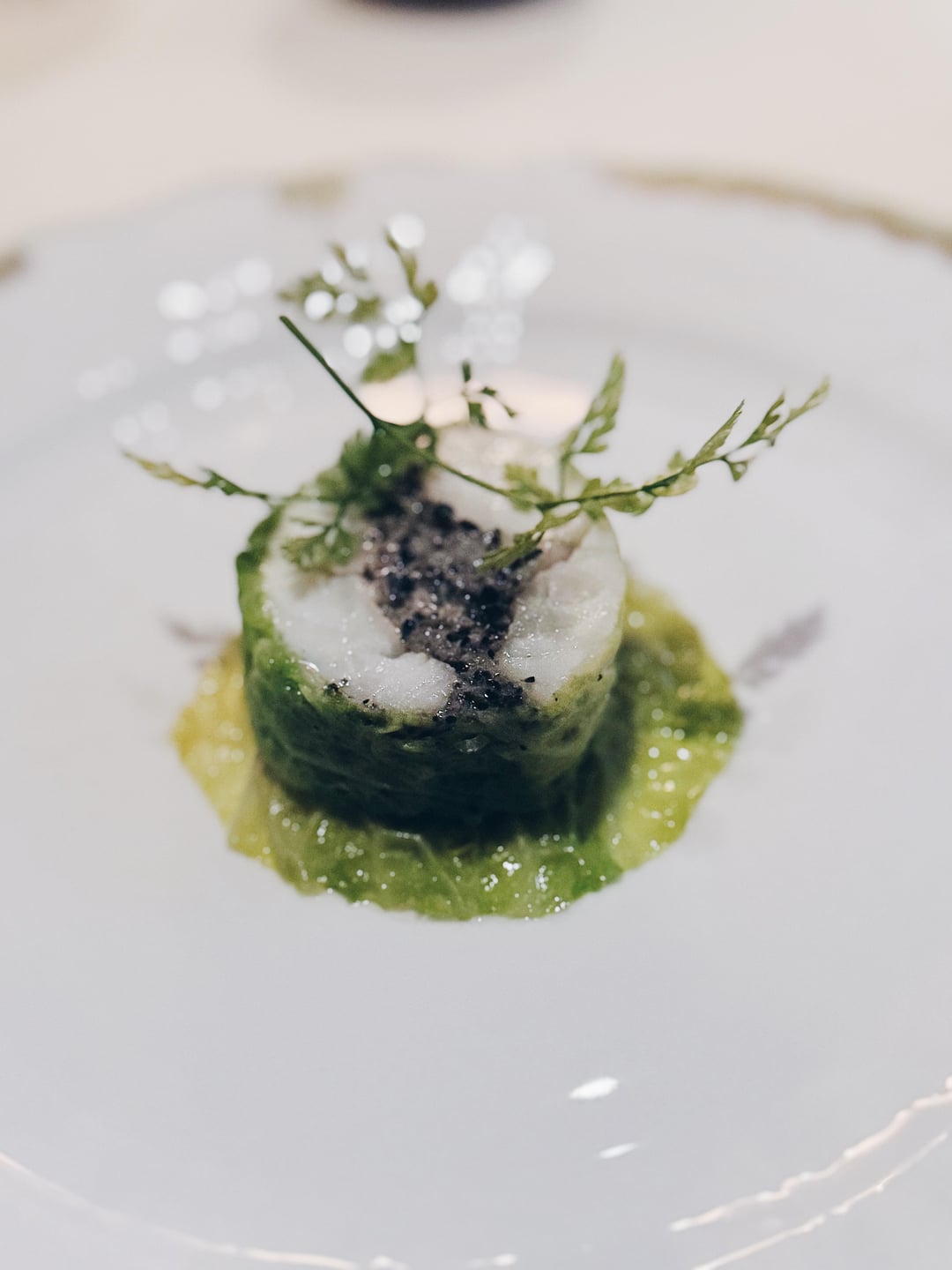
- Steamed Spanish turbot, with a périgord black truffle and banana mousseline, butter-braised sauerkraut, and caraway cabbage sauce: The dish was stunningly plated, but I wish it tasted as good as it looked. Both banana and black truffle are both strong, heady flavors, and together, produced a very intense, pungent (and in my opinion, unpleasant) taste that did not complement the delicacy of a white fish like turbot.
- Carbonized rio red grapefruit with extra virgin avocado oil and scotch bonnet chili: The grapefruit sorbet was very bitter, and this was all I could taste in this dish. The beverage that came with this was a lot better; a very unique drink made from scotch bonnet chili, but with the capsaicin (what makes chili peppers spicy) extracted. It tastes slightly floral and fruity sweetness on your palate that leaves your tongue tingling, but without any spice.
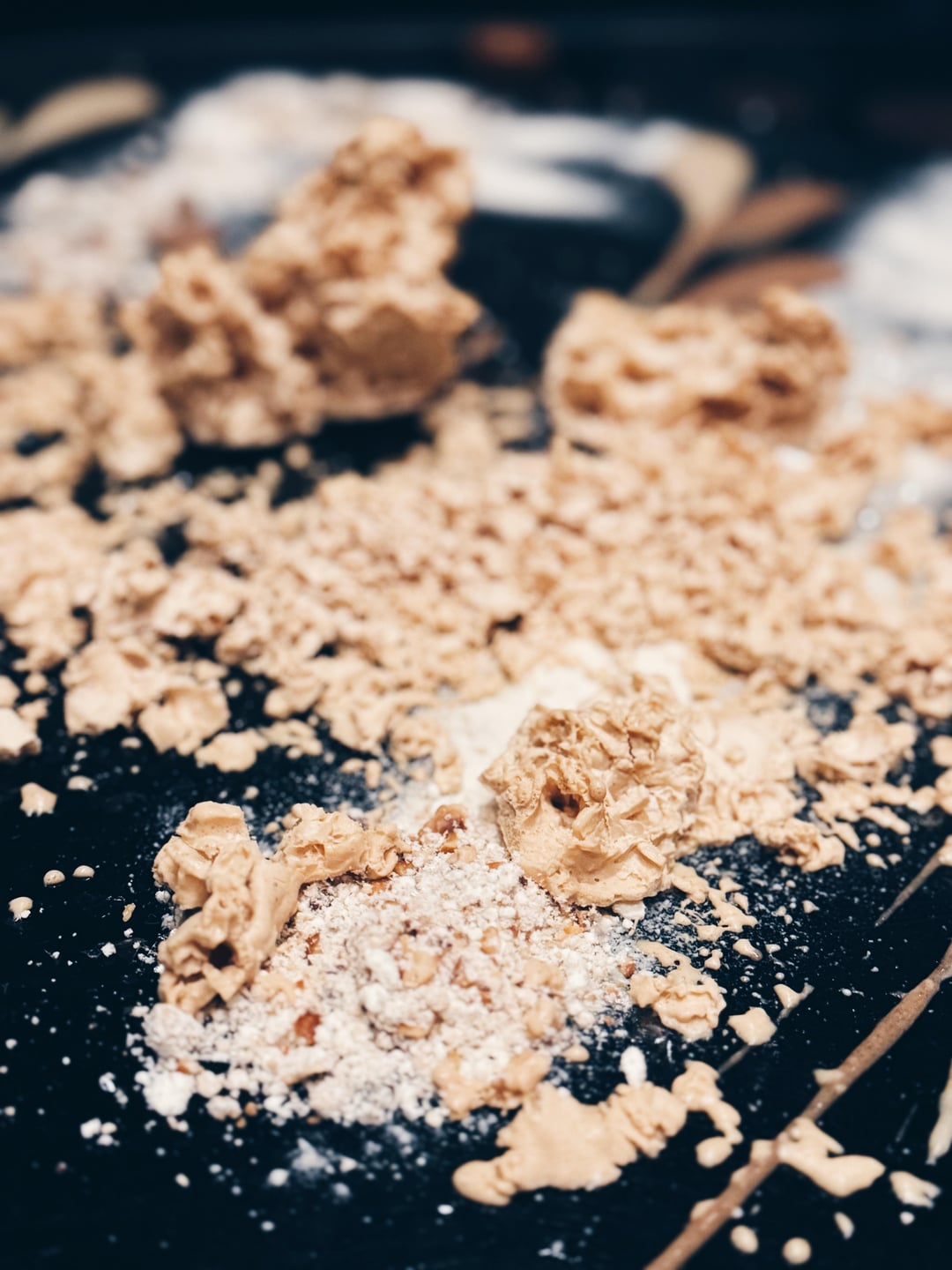
- Roasted peanut sponge and massaman curry: A small but surprisingly tasty morsel, the sponge cake was filled with a deliciously aromatic and flavorful curry inside and dusted on top with peanut.
- 14-day aged white pekin duck, twizzled and poached rhubarb, szechuan peppercorns, and rhubarb rouennaise sauce made from duck liver. The duck was well-cooked, ruby pink in the center, fatty and tender, but what let the dish down were the accompaniments. The menu doesn’t seem to list it, but the dish included a parsnip vanilla “puree” with a strange texture, and a twizzled rhubarb that had the appearance and texture of licorice. It was slightly hard, sticky and I had to gnaw at it. The duck and sauce were good, but I wasn’t a fan of the other components.
- Bing cherry juice braised konbu, fermented cherries and périgord black truffle: This was like a little biscuit sandwich made with two cherry discs with truffle in between. I wished there was more sweetness and tartness from the cherry; an acidic or pickled element of some sort.
- Ribeye of Japanese wagyu beef, Italian udon noodle, flavored with smoked paprika, toasted bread purée, castelvetrano olive and artichoke emulsion: The pièce de résistance. This dish was exquisite, artfully plated like a Piet Mondrian painting. The server tells us the dish was inspired by Chef Grant Achatz’s travels in Japan and Italy, with ingredients like parmigiano reggiano in the sauce, wagyu beef, and an “Italian” udon, yet all of them work together in perfect harmony. The beef is dusted with black garlic and olive, and perfectly cooked. The toasted bread purée was deep, toasted, almost dark chocolatey; a fascinating flavor profile.
Act III: Denouement
We come, now, to the final act—dessert. Darkness falls and the music swells, rising to a crescendo. A line of servers march out in unison from the kitchen, sliding a piece of black acrylic onto each table—blank canvases awaiting their masterpieces. The servers swirl a trio of sauces on the surface, covering it with streaks of paint: date, chai and chocolate. A solid chunk of ice cream is shattered into smithereens. Everything is dusted with glittering, sugary snow. The ice cream and snow melt on the tongue, complementing the gingery spice of the chai, the smooth milkiness of chocolate, and the bitterness of coffee. I'm glad they kept this iconic dessert format, despite the change in the menu. The petit fours (e.g., a meringue, a fudgy chocolate short crust thing) were ok, but not particularly memorable.
Top 3 dishes:
- Ribeye wagyu
- Tōgan and mussel tea
- Spring onion cream (the first dish)
Overall thoughts (the tldr): The best way I can describe a meal at Alinea is to liken it to a musical performance—because that’s what it is, a work of art. Like a musical piece, it has its highs and lows. Not every dish hits, but when it does, it takes your breath away like a soaring aria. I truly enjoyed the theatricality and artistry of Alinea, and appreciated the depth, complexity and thought that goes behind the crafting of each and every dish.
The food was good (not perfect), but the dining experience at Alinea transcends that—it’s an experience. When you dine at Alinea, it’s not just dinner and a show; the dinner itself is the show.
(Oh, and I forgot to mention—the meal was looong. Not that I'm complaining. We started at 9pm and ended past midnight. Service was flawless. Thank you to the chefs and the staff for the incredible journey.)
by anothercupcake
3 Comments
Idk if this was your intention but this reads like an AI wrote a love letter to Grant Achatz
That looks absolutely incredible and i’m jealous but i also can’t help but laugh at the grape
Looks great except pics 10 and 11 look like ragebait lol